
We Turned Hotel Key Cards Into a Smart Home System — And You Can Too
Part 1 of the Shomer Build Series
It started with a YouTube video.
I was down a rabbit hole of home automation content when I came across this video — someone had taken their vinyl record collection and put NFC stickers inside each sleeve. Tap your phone to the record, the album starts playing. No app to open. No searching. Just the physical act of picking up a record triggering the music. Simple, tactile, and genuinely delightful.
That was the spark. What started as “I want to do that with my vinyl wall” and “I need a vinyl wall so I can do this” turned into a weeks-long design session that grew into something much bigger. If a record sleeve can trigger a playlist — what else can a small sticker on a physical object trigger? A laundry timer. A maintenance log. A push notification to my wife. A Google Home routine. A plant watering reminder with an AI-generated care schedule.
What do you do with old hotel key cards? Most people toss them. I decided to turn them into a smart home system.
Over the next several weeks I’m going to document the entire build here on the CookieBytes Tech blog — every decision, every tool, every line of code — as I construct something I’m calling Shomer. It’s a self-hosted NFC-powered home hub that lets my wife Emily and I control our home, track maintenance, manage our garden, log pet care, and stay in sync as a household — all by tapping our phones to physical objects around the house.
And yes — everything I’m building for our home, I can build for yours too.
What Is NFC and Why Should You Care?
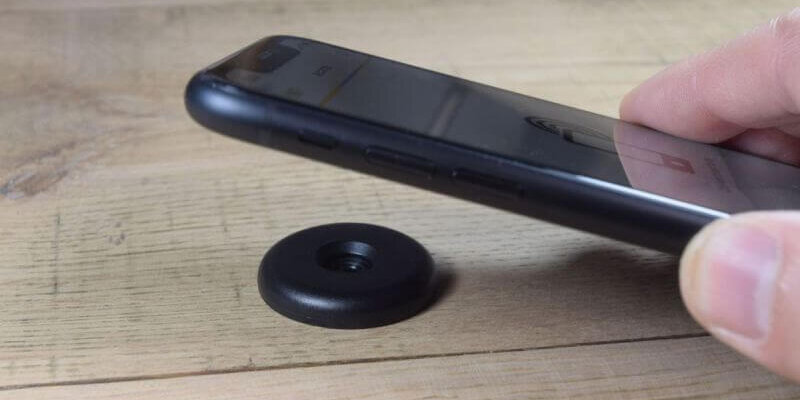
NFC stands for Near Field Communication. It’s the same technology behind tap-to-pay at the register and hotel room key cards. When your phone gets close to an NFC chip — we’re talking less than an inch — it reads whatever is stored on that chip and can trigger an action.
Here’s what makes it interesting for home automation: you can write to those chips yourself.
A pack of 50 blank NFC stickers costs about $15 on Amazon. These are the ones we are looking at. Got a stack of old hotel key cards? Free, if you’ve been traveling. Each one becomes a programmable physical button you can stick anywhere — on your vinyl record collection, your refrigerator, your medicine cabinet, your car dashboard.
No app to open. No voice command to say. Just tap and it happens.
The Problem I Was Actually Solving
My wife Emily is a teacher. I run CookieBytes Tech. We’re both busy people living in a house that has the same maintenance needs, the same pets to feed, and the same tendency to look at each other and say “did you already feed the dogs?”
What I wanted wasn’t just smart home gadgets. I wanted:
- A way for both of us to interact with the same system — she’s on iPhone, I’m on Android
- A log of what’s actually been done around the house so nothing falls through the cracks
- Reminders that feel natural, not a phone notification I’ll swipe away
- A system that could grow — from laundry timers to plant watering schedules to car maintenance tracking
- Something that lives on our own server, not someone else’s cloud
That last one matters a lot to me. When you rely on a third-party smart home platform, you’re trusting that company to keep the lights on, keep your data private, and not change their pricing model next year. I’ve been building self-hosted infrastructure for years through CookieBytes, and I believe in owning your own stack.
What Shomer Actually Does
Shomer (שׁוֹמֵר) is Hebrew for watchman or guardian. It’s the name I gave this project because it literally watches over the house — logging events, tracking schedules, sending reminders, and keeping both of us informed.
Here’s what the first version will include:
NFC Tag Triggers Every physical tag in the house has a unique webhook URL. When either phone scans it, the system logs the event, knows who scanned it, and fires whatever action is assigned — a push notification, a Spotify playlist, a Google Home routine, a countdown timer.
Maintenance Tracking Every appliance and vehicle gets a card. Tap it when you service it. The system logs the date, calculates when it’s due again, and sends a reminder before it’s overdue. HVAC filters, car oil changes, washer drum cleaning, water heater flushes — all of it tracked without a spreadsheet or a sticky note.
Plant Manager with AI-Generated Care Schedules This one I’m particularly excited about. When you add a new plant to the system, it walks you through a short setup wizard — what kind of plant, what soil, how much sun, indoors or outdoors. That information gets sent to an AI model which generates a personalized watering schedule, complete with seasonal adjustments for our Alabama summers. Tap the plant’s sticker when you water it. The system handles the rest.
Cross-Platform Notifications Emily gets push notifications on her iPhone. I get them on my Android. The same tap from the same card reaches both of us. No group texts, no “hey did you see my message.”
A Points and Streak System Because why not make it a game? Every completed task earns household XP. Streaks multiply your points. There are achievement badges. The dashboard has a leaderboard. Emily is already winning and the system isn’t even built yet.
A Web Dashboard Everything is visible at shomer.cookiebytestech.com — recent activity, maintenance schedules, plant status, points, and a complete event log. Accessible from any device, anywhere, because it’s running on our home server with a proper subdomain and SSL certificate.
The Tech Stack (The Honest Version)
I want to be transparent about what’s actually powering this because I think it matters — both for people who want to build their own version, and for people who might want CookieBytes to build one for them.
Here’s what’s running under the hood:
The server is a machine I call Tank — a home server running Ubuntu Linux with Docker, hosting several self-built services I’ve named in a consistent Hebrew/English naming convention. Tank runs everything from my automation workflows to my document signing platform to this project.
The automation layer is a tool called n8n hosted locally — a self-hosted workflow automation platform. When an NFC tag gets scanned, Wire handles what happens next: should it send a notification? Start a Spotify playlist? Trigger a Google Home routine? Wire decides.
The notification layer is Ntfy — a lightweight self-hosted push notification server. One ping, both phones. No accounts required on our end.
The AI layer uses the Claude API for the plant care wizard and other intelligent features. When you tell it you have a Roma tomato in raised bed soil in full Alabama sun, it doesn’t give you a generic answer — it gives you a schedule that actually accounts for your conditions.
Storage is SQLite for the application data and Google Photos shared albums for maintenance photos. Nothing sits on our server that doesn’t need to.
The frontend is a React dashboard. The backend is Node/Express. The whole thing runs in Docker and sits behind an Apache reverse proxy with a Let’s Encrypt SSL certificate.
Is this more complex than buying a $30 smart home hub? Yes. Is it more capable, more private, more yours, and more interesting to talk about? Also yes.
What This Means for CookieBytes Customers
Here’s where I want to be direct: I can build a version of this for you.
Not a watered-down version. A real, custom, self-hosted NFC automation hub tailored to your home or small business — running on hardware you own, with no monthly subscription to anyone.
Some use cases I’m already thinking about for clients:
For homeowners: A maintenance tracking system that keeps your appliance history, sends you reminders, and logs everything with photos. When it’s time to sell your house or make a warranty claim, you have a documented record of every filter change, every service call, every seasonal task — all timestamped and organized.
For small businesses: Imagine tapping an NFC card at the start of a job to log your arrival, tap another to note what you serviced, tap again when you’re done. No paper forms. No forgetting to log hours. Everything goes straight into a dashboard your office can see in real time. A mechanic shop, a cleaning service, a landscaping crew — any business where people are moving through physical spaces could benefit from this.
For rental property owners: A card in each unit for maintenance logs. Contractors tap in when they arrive and out when they leave. You get a timestamped record of every visit, every repair, every inspection — without playing phone tag.
For churches and nonprofits: Volunteer check-in via NFC tap. Room usage tracking. Equipment maintenance logs. Event setup checklists that log completion in real time. I do IT work with several local nonprofits and I can already see a dozen ways this applies.
The underlying system is the same in every case. The cards, the tags, the triggers, the dashboard — all customized to the workflow.
Follow the Build
This is Part 1. Over the coming weeks I’ll be publishing each phase of the build as it happens:
- Part 2 — Setting up the server infrastructure and getting the subdomain live
- Part 3 — Building the database schema and backend API
- Part 4 — The Plant Manager: AI-powered care schedules from a 6-question wizard
- Part 5 — The Maintenance Tracker: never forget a filter change again
- Part 6 — Gamification: points, streaks, levels, and why Emily is already beating me
- Part 7 — Wiring it all together: Spotify, Google Home, and push notifications
- Part 8 — What a customer version looks like and how to get one
I’m building this for my own house, documenting it honestly — including the parts that don’t work the first time — and showing exactly what’s possible when you treat your home like infrastructure worth maintaining.
If you want to follow along, subscribe below. If you want to skip the DIY and just have one built, reach out. That’s what CookieBytes is here for.